How to read a coating data sheet, and what it leaves out
It's 30 °C on site, the two-pack is mixed, and the data sheet gives one pot life figure. What that figure doesn't tell you is the temperature it was measured at, and a warm mix can run out of working time well before it. That detail sits in the small print, if it's there at all.
A technical data sheet is the most-used document in coating work and one of the most misread. Not because it's wrong, but because every number on it comes with conditions, and those conditions are rarely yours.
The short answer
Read the conditions before the numbers. Temperature, film thickness and test method sit behind almost every value.
Do the arithmetic yourself. Spreading rate and wet film thickness follow from volume solids in two lines.
For fire products, the data sheet points to the real document. The assessment or classification report says what the product was tested for, on what, and where it may be used.
Data sheet or safety data sheet?
Two different documents. The safety data sheet (SDS) is the legal one: in the EU, REACH requires it for hazardous mixtures and sets its format. It covers hazards, handling, storage and disposal.
The technical data sheet (TDS) is the one this article is about. It describes the product, how to apply it and what to expect. As far as I know, no single standard fixes what goes on it, so layout and content vary between suppliers. Treat it as a summary, not a contract.
Which lines matter most, and how do you read them?
Figure 1 sums up the lines I'd read first, what each one tells you, and what it leaves to you.
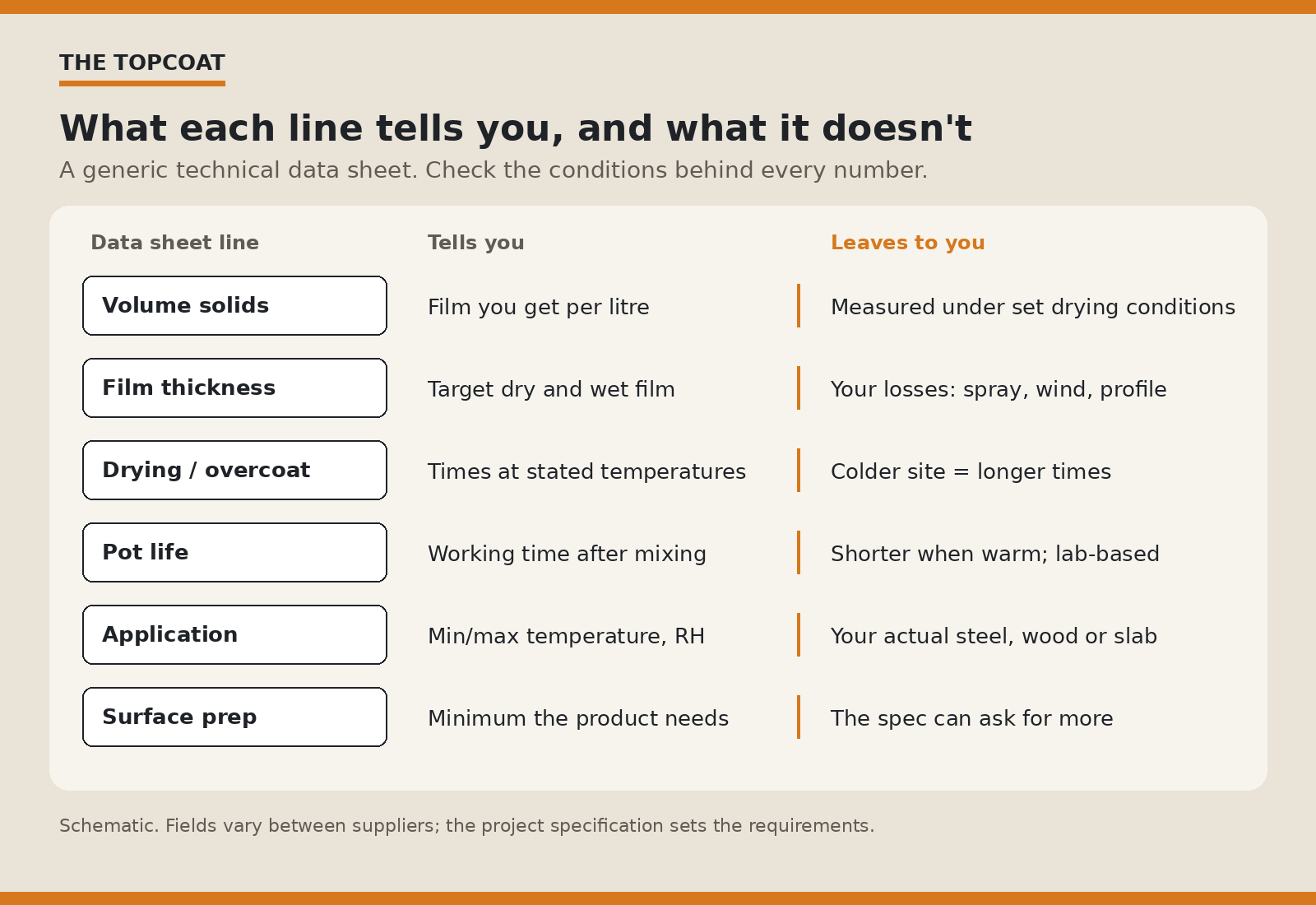
Figure 1. Six common data sheet lines, what each tells you and what it leaves to you. Fields vary between suppliers.
Volume solids. This is the share of the wet paint, by volume, that stays on the surface as film. It's the number that tells you how much coating you're actually buying. ISO 3233-1 is one method to measure it, and it measures the dried film under set drying conditions. Two quick calculations follow from it:
-
Theoretical spreading rate (m²/L) = volume solids (%) × 10 ÷ dry film thickness (µm). A product with 80% volume solids applied at 200 µm dry covers 4.0 m² per litre, in theory.
-
Wet film thickness (µm) = dry film thickness (µm) × 100 ÷ volume solids (%). The same product needs about 250 µm wet to reach 200 µm dry.
-
Wet application rate (g/m²) = wet film thickness (µm) × density (g/cm³ or kg/L). A 1 µm wet film over 1 m² is 1 mL of paint, so the density turns thickness into weight. With a density of 1.4 kg/L, 250 µm wet is about 350 g/m².
The weight version is worth knowing because some coatings, fire-retardant coatings for wood among them, are often specified and checked as an amount in g/m² rather than as a film thickness. Weighing what goes on a known area is also a simple site check on porous substrates, where a wet film gauge reading is hard to trust.
These are illustrative numbers, not from any product. "Theoretical" is doing a lot of work in that first line: overspray, wind, surface profile and complex shapes all cost material, and the data sheet can't know your losses.
Film thickness. Most sheets give a recommended dry film thickness range. Treat both ends as limits. Too thin and you lose protection. Too thick and you can get sagging, cracking or poor cure, which I wrote about in an earlier post on thickness.
Drying and overcoating times. These are given at stated temperatures. Colder usually means slower, and many sheets give a table for that reason. Look for both a minimum and a maximum overcoat interval: the maximum is the one that gets forgotten.
Pot life. ISO 9514 describes a laboratory method for pot life of multicomponent coatings, under standard conditions. It also notes that suppliers may adjust the result for practical use and call it a "practical pot life". Either way, a warm mix has less working time than the number suggests.
Application conditions. Minimum and maximum temperature, humidity and the margin above dew point. These refer to the surface and the air on your site, not the lab. My last article covered the dew point check in detail.
Surface preparation. The sheet gives the minimum the product needs, often as a grade such as Sa 2½ to ISO 8501-1 on steel. The project specification can ask for more, and it wins.
Where do people get misled? Fire protective coatings
Fire products show the gap between the data sheet and the evidence most clearly, because the real performance lives in a separate document. Figure 2 compares the two most common cases.
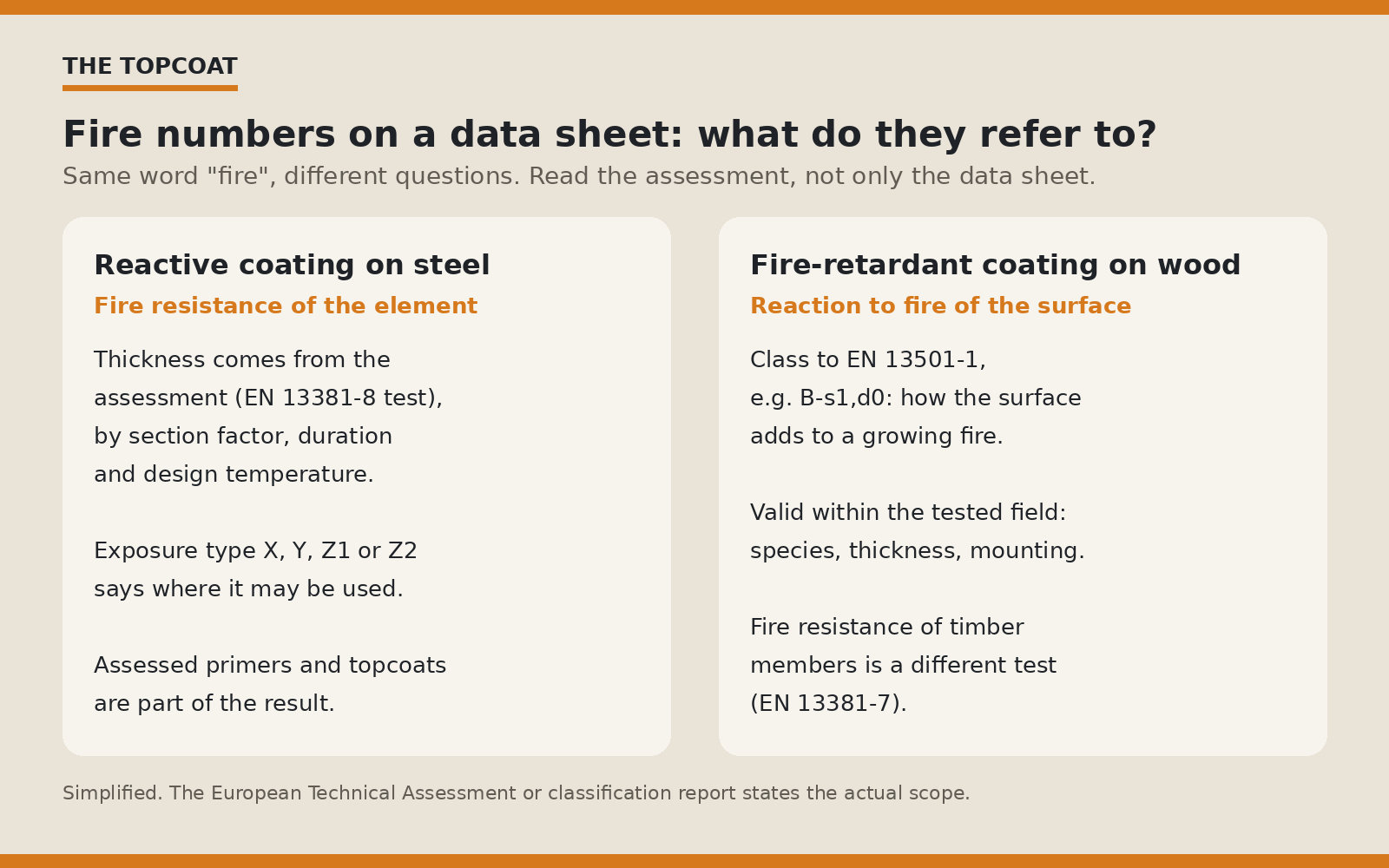
Figure 2. Fire numbers on a data sheet refer to different questions on steel and on wood. The assessment or classification report states the actual scope.
Reactive (intumescent) coatings on steel
The data sheet doesn't give the thickness for your beam. The required thickness depends on the section factor of the member, the fire resistance period and the design temperature of the steel. It comes from tables built on fire testing to EN 13381-8. In Europe these results usually sit in a European Technical Assessment (ETA) issued against EAD 350402-00-1106, the assessment document for reactive coatings on steel.
The exposure type is easy to miss. That EAD defines four types. Type X covers all conditions, including outdoor exposure. Type Y covers interior and semi-exposed conditions, below freezing but without rain. Types Z1 and Z2 are for interior use only, humid (85% relative humidity or more) and drier respectively. A Type Z2 product on an open car park deck is outside what it was assessed for, whatever the fire rating says.
The primer and topcoat are part of the result. An ETA names the primers and topcoats that were assessed, either specifically or by generic type. "Compatible with most primers" on a data sheet is not the same thing. I made this point in an earlier post: a fire rating belongs to a system, not a product.
Fire-retardant coatings on wood
The class answers a different question. A wood coating's fire class under EN 13501-1, for example B-s1,d0, describes reaction to fire: how much the surface adds to a growing fire, plus smoke (s) and flaming droplets (d). It says nothing about how long a loadbearing timber member keeps carrying its load. That's fire resistance, and applied protection on timber members has its own test method, EN 13381-7.
The class is valid within the tested field of application. A classification report states the conditions it covers, such as wood species, thickness, mounting and how the coating was applied. Outside those, the class doesn't automatically carry over.
Outdoors is its own question. Whether a reaction-to-fire class survives weathering is a durability question. For fire-retardant treated wood products, EN 16755 sets durability classes for interior and exterior end uses. It's a topic I'll come back to in more depth.
What does a data sheet leave out?
-
Your substrate. Its condition, moisture, contamination and profile on the day.
-
Your climate. Most values come from controlled conditions. Your site is warmer, colder, windier or wetter.
-
Your losses. Theoretical spreading rate assumes all of the paint ends up on the surface as film.
-
Your system. Compatibility with layers from other suppliers, or with an old coating you're overcoating.
-
Your service life. A data sheet rarely tells you how the coating performs after years in your exposure.
-
Its own age. Data sheets get revised. An old printout can be out of date.
Before you rely on a data sheet
-
Check you have the latest version, and note its date.
-
Read the temperature and test conditions behind every number you use.
-
Calculate wet film thickness and consumption yourself.
-
For fire products, read the assessment or classification report, not just the data sheet.
-
Check that the exposure type or field of application matches your job.
-
If your job sits outside what the sheet covers, ask the supplier in writing.
Which line on a data sheet do you see misread most often? I'd like to hear it in the comments.
This article is general information. The project specification, the data sheet and the product's assessment documents set the requirements for your job.
Written by a PhD chemical engineer leading R&D in protective coatings. Views are the author's own.
Sources
- ISO 3233-1:2019, Paints and varnishes, Determination of percentage volume of non-volatile matter, Part 1: Method using a coated test panel...: https://www.iso.org/standard/77255.html
- ISO 9514:2019, Paints and varnishes, Determination of the pot life of multicomponent coating systems: https://www.iso.org/standard/77491.html
- ISO 8501-1, Preparation of steel substrates before application of paints and related products, Visual assessment of surface cleanliness (edition not stated)
- EN 13381-8, Test methods for determining the contribution to the fire resistance of structural members, Applied reactive protection to steel members (edition not stated)
- EAD 350402-00-1106, Reactive coatings for fire protection of steel elements (EOTA, September 2017): https://nada.gov.sk/uploads/extfiles/vystavba/StavebnictvoPosudzovanie/EAD%202019/EAD%20350402-00-1106.pdf
- EN 13501-1, Fire classification of construction products and building elements, Classification using data from reaction to fire tests (edition not stated)
- EN 13381-7:2019, Test methods for determining the contribution to the fire resistance of structural members, Applied protection to timber members: https://iteh.es/catalog/standards/cen/4d52d75a-658e-4b7b-aebf-99b546b7a20a/en-13381-7-2019
- EN 16755:2017, Durability of reaction to fire performance, Classes of fire-retardant treated wood products in interior and exterior end use applications: https://iteh.es/catalog/standards/cen/3ae25471-9c3f-48d0-beb8-c2af7c81a509/en-16755-2017
- Regulation (EC) No 1907/2006 (REACH), Article 31 and Annex II (safety data sheets)