Latest articles
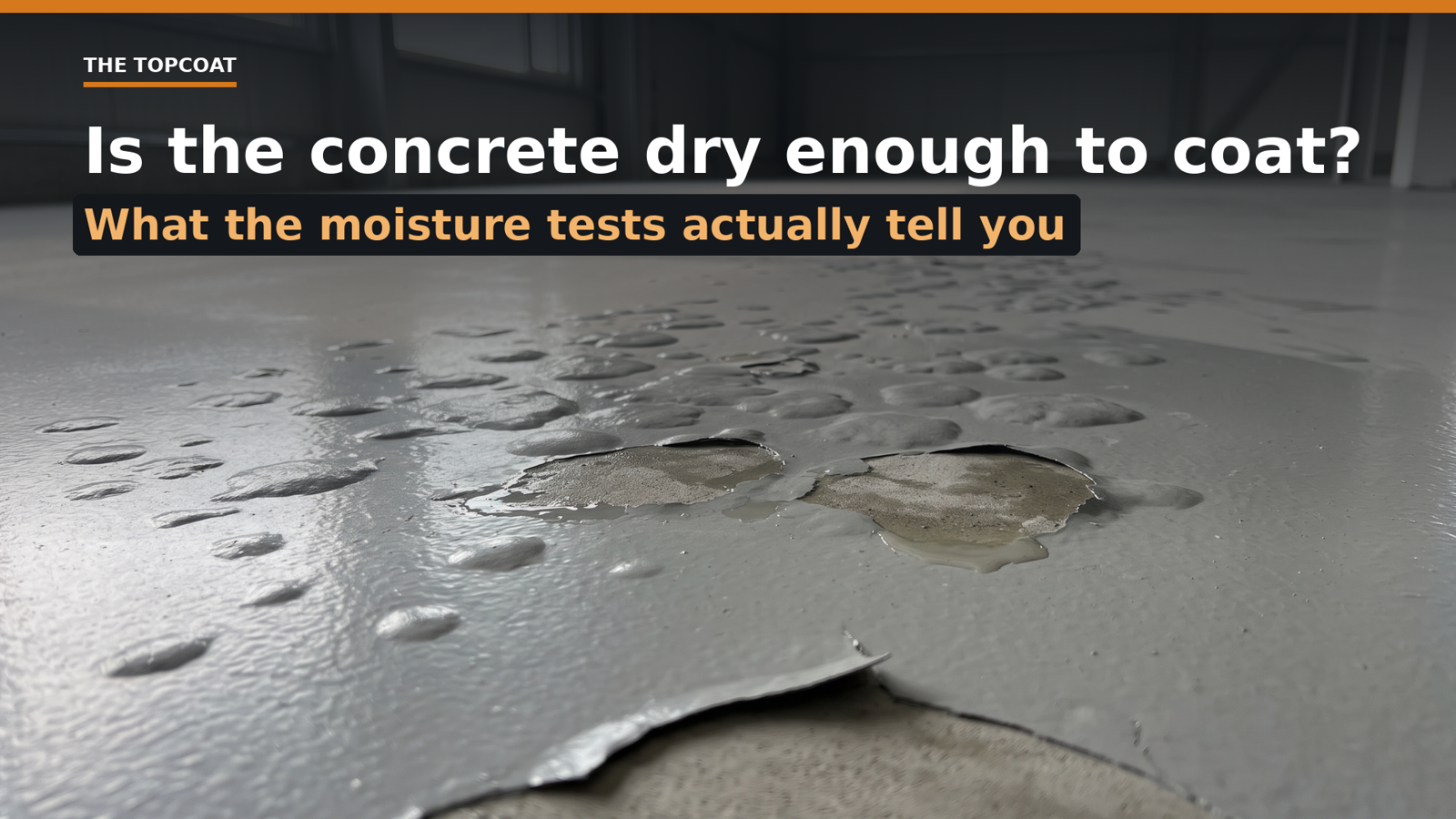
Is the concrete dry enough to coat? What the moisture tests actually tell you
The floor coating looked fine on handover. A few weeks later there are blisters, some of them full of liquid, and the coating lifts in patches. The slab had been poured more than a month…
How to read a coating data sheet, and what it leaves out
It's 30 °C on site, the two-pack is mixed, and the data sheet gives one pot life figure. What that figure doesn't tell you is the temperature it was measured at, and a warm mix can run out…
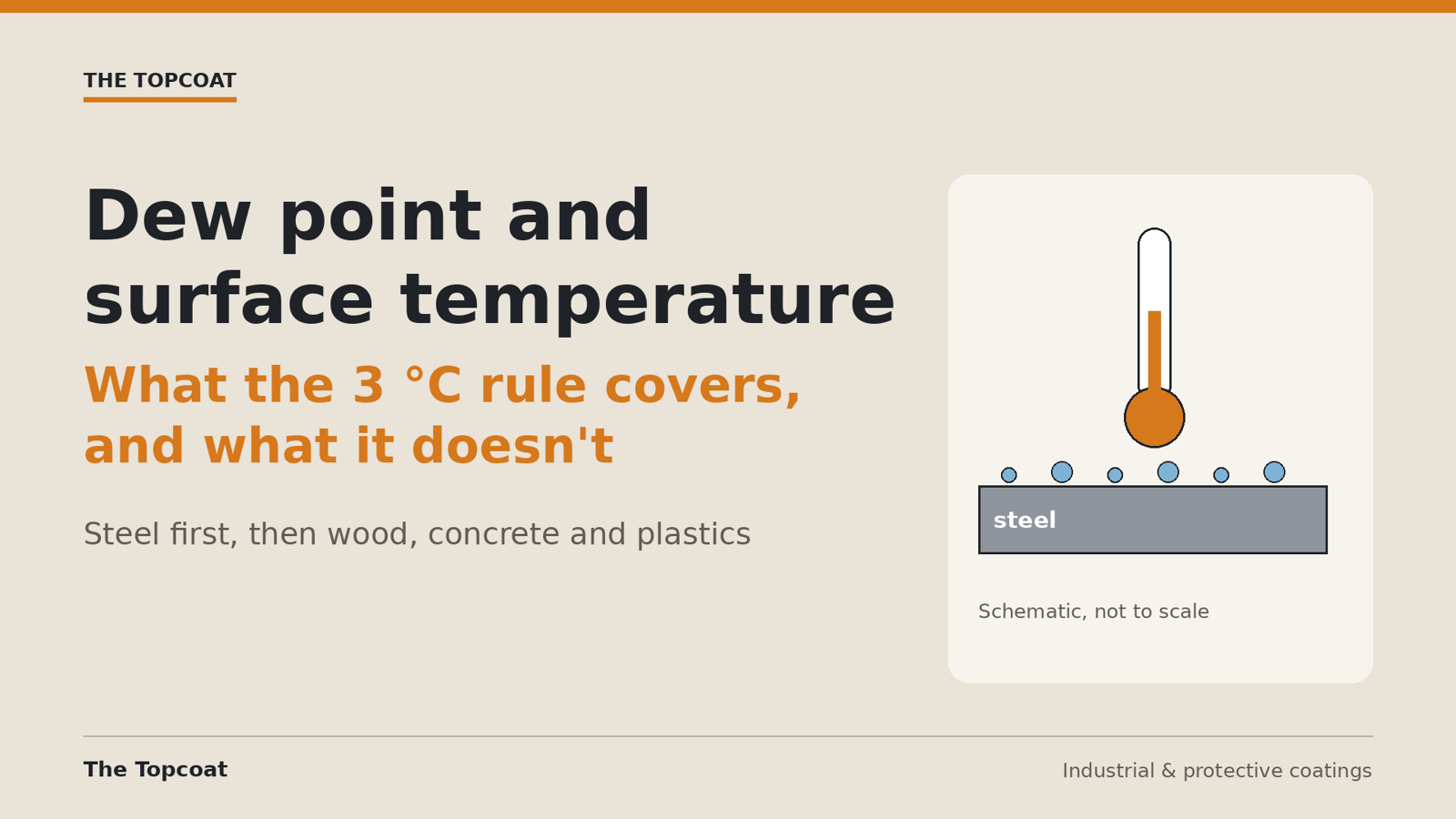
Dew point and surface temperature: what the 3 °C rule covers, and what it doesn't
It's a cold, clear morning. The blast-cleaned steel looks dry and feels dry. The air isn't especially humid. And there's still a film of water on it that nobody can see.
Latest notes
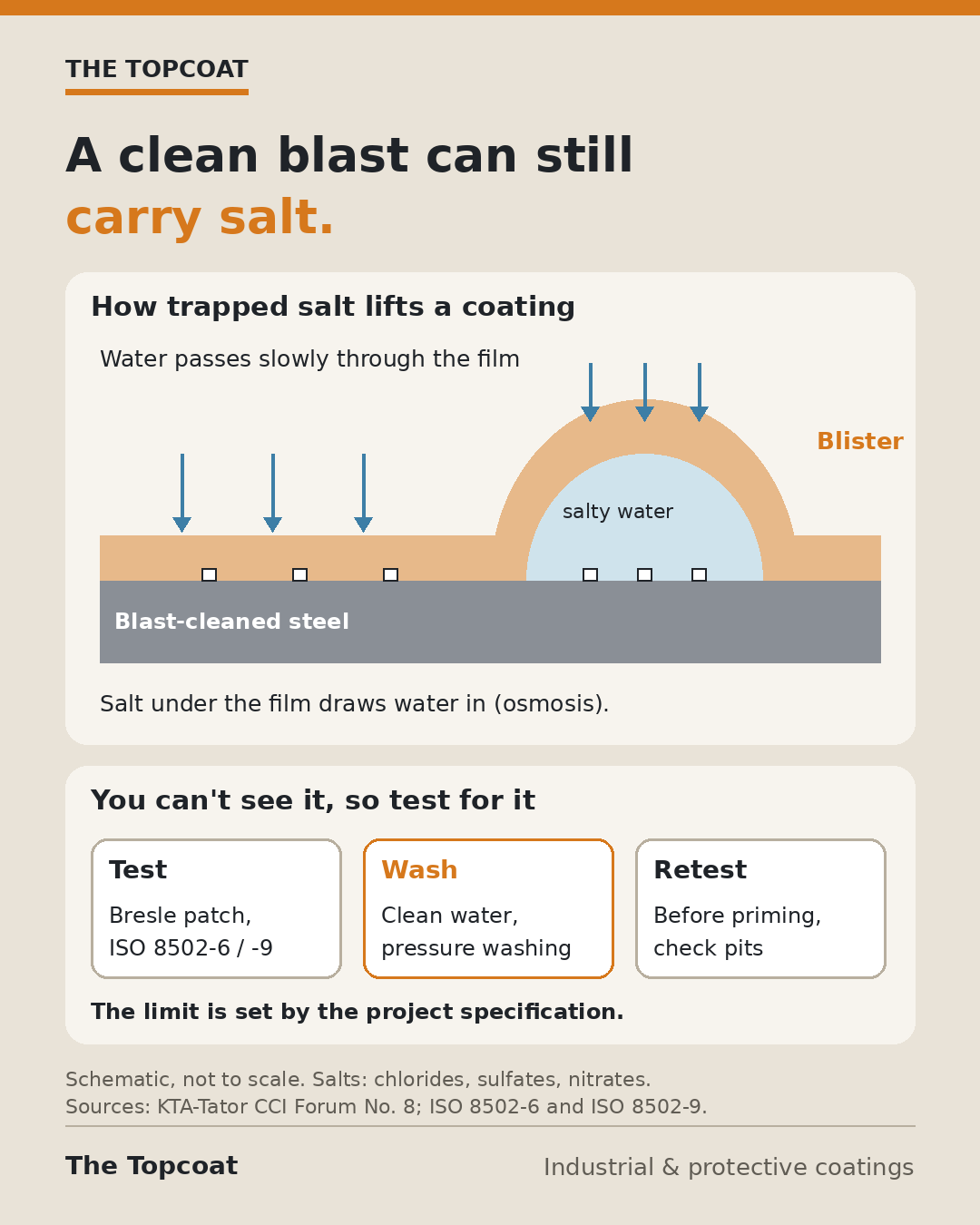
A clean blast can still fail. The problem is the salt you can't see
Blast-cleaned steel can look perfect: an even grey profile, no rust, no dust. The coating goes on to spec. A year later the surface is covered in blisters. Break one…
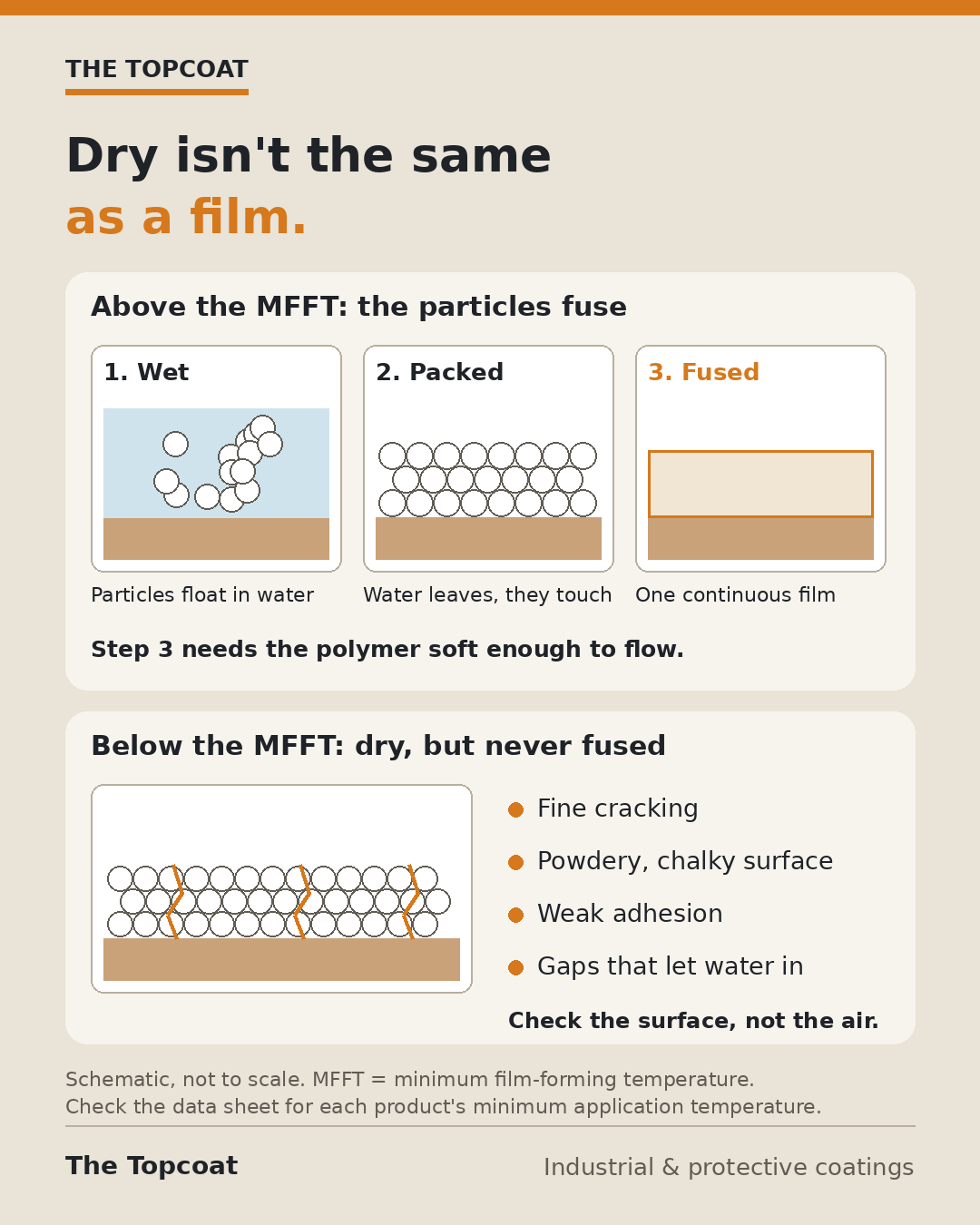
A waterborne finish can dry in the cold and still never become a film
As the outdoor painting season closes in much of Europe, a common mistake happens with waterborne finishes on windows, doors, cladding and decking.
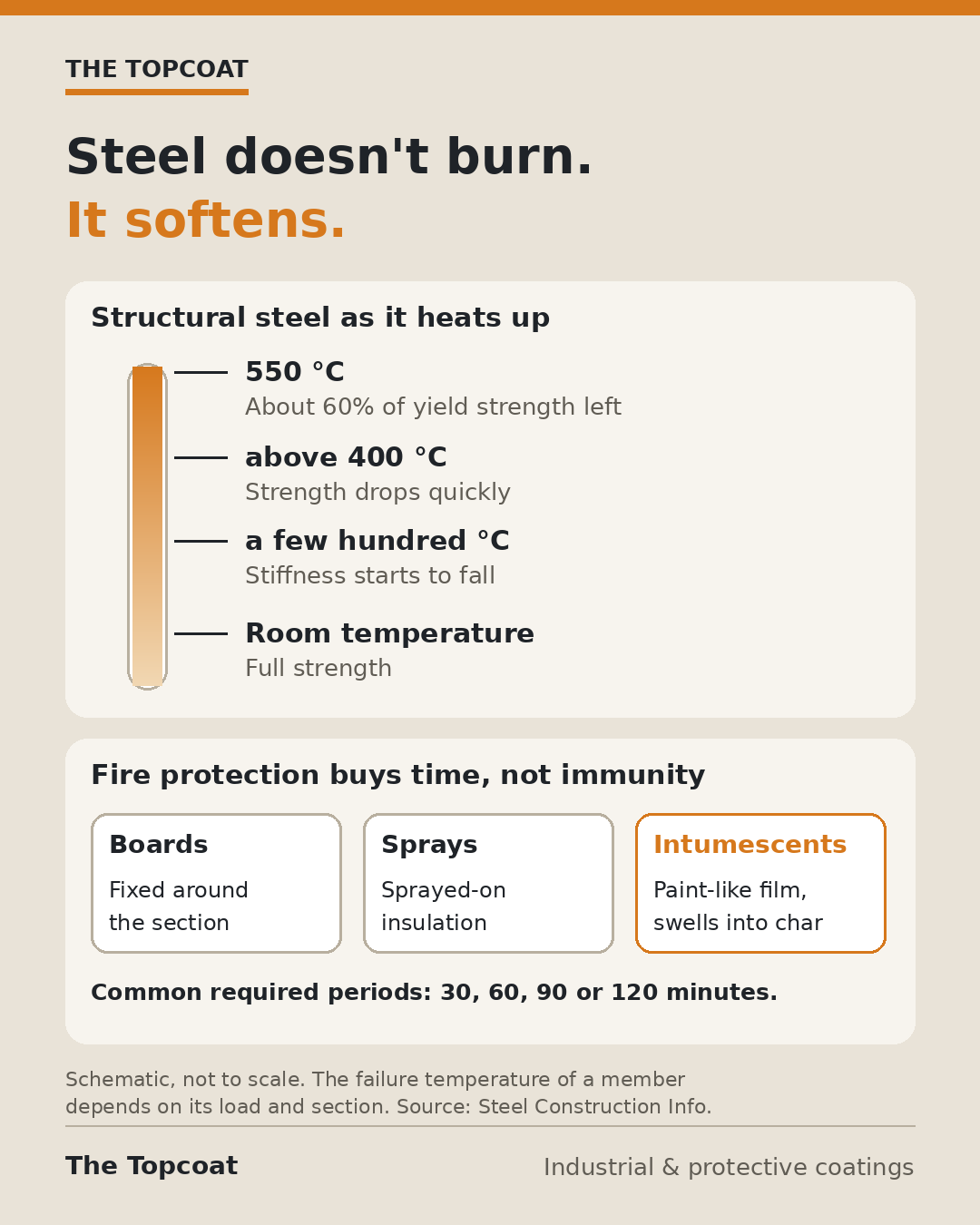
Steel doesn't burn. So why does it need fire protection?
Structural steel is non-combustible. It won't catch fire and it won't feed one. So people are often surprised to see steel beams and columns boxed in with boards or…
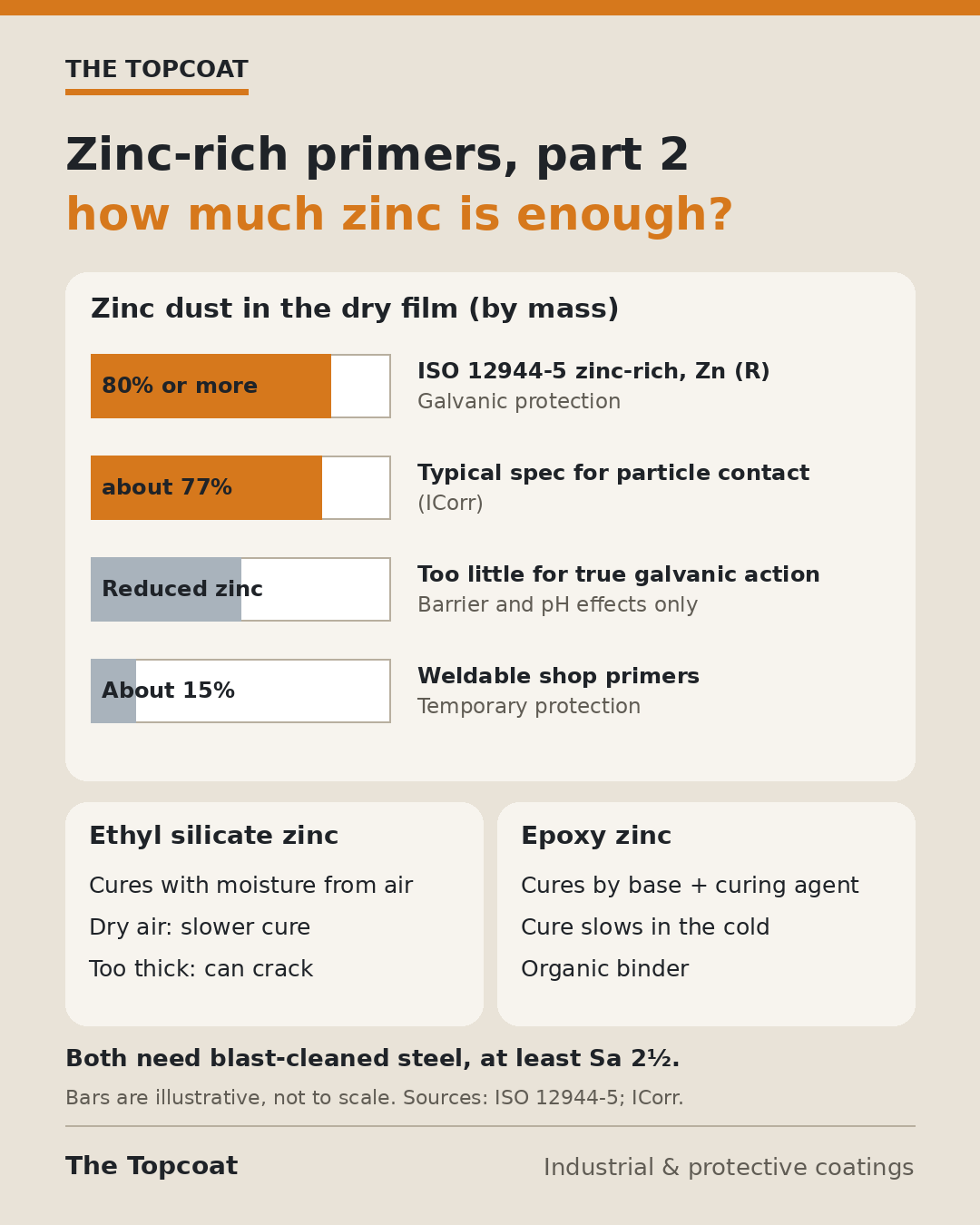
Zinc-rich primers, part 2: how much zinc is enough?
Zinc only protects steel if the particles touch each other and the metal. Too little zinc and they don't. Too much and the film falls apart.
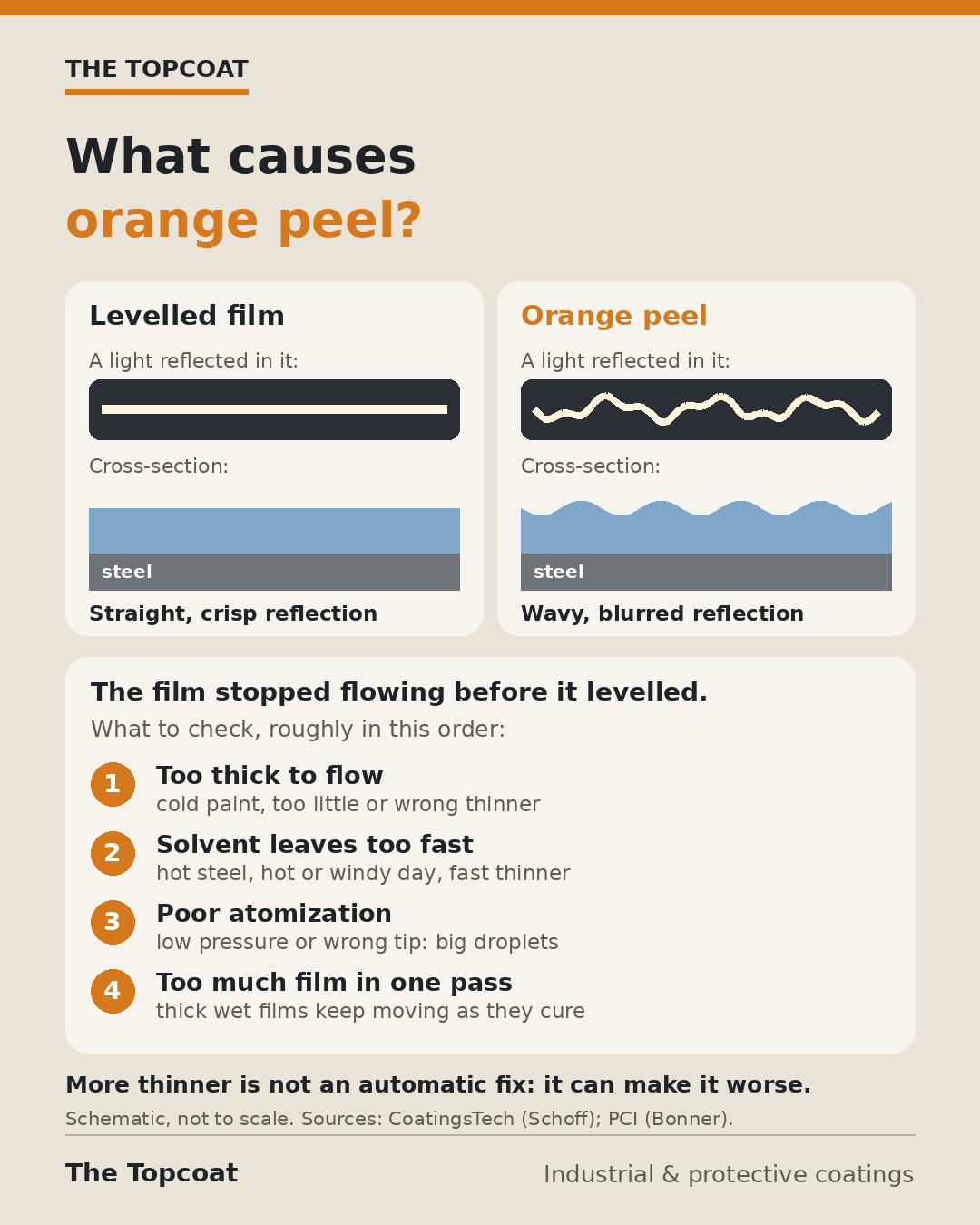
What causes orange peel? And why more thinner isn't always the fix
Orange peel is a coating surface that looks like the skin of an orange: a field of small, smooth bumps instead of a flat film. It's one of the most common things people…
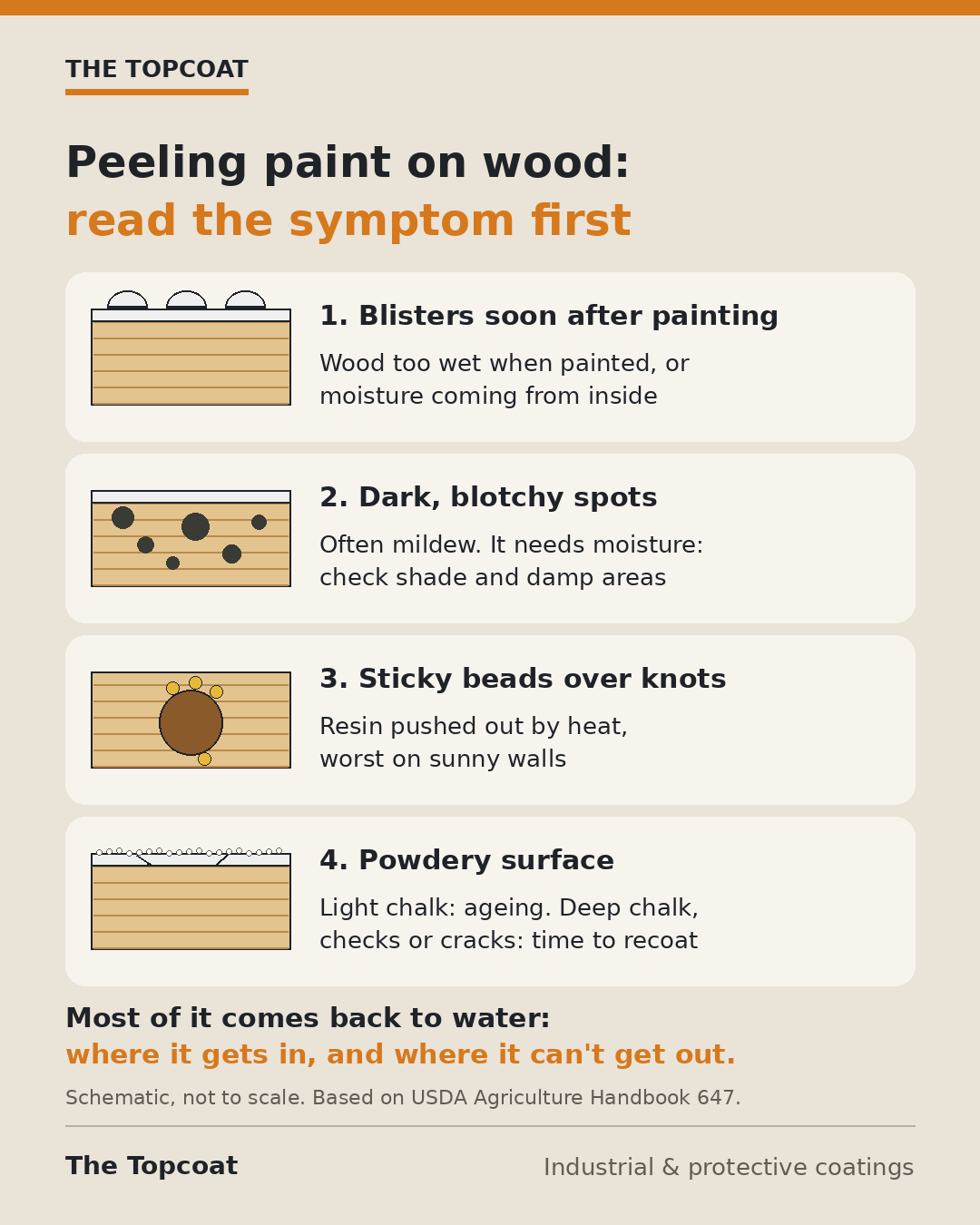
Peeling paint on wood: read the symptom first
Paint failing on a timber wall is a symptom, not a diagnosis. What it looks like tells you where to look.