
A fire rating belongs to a system, not a product
"This product is rated for 60 minutes."
You hear some version of that sentence on almost every steel project. It's close, but not quite right.
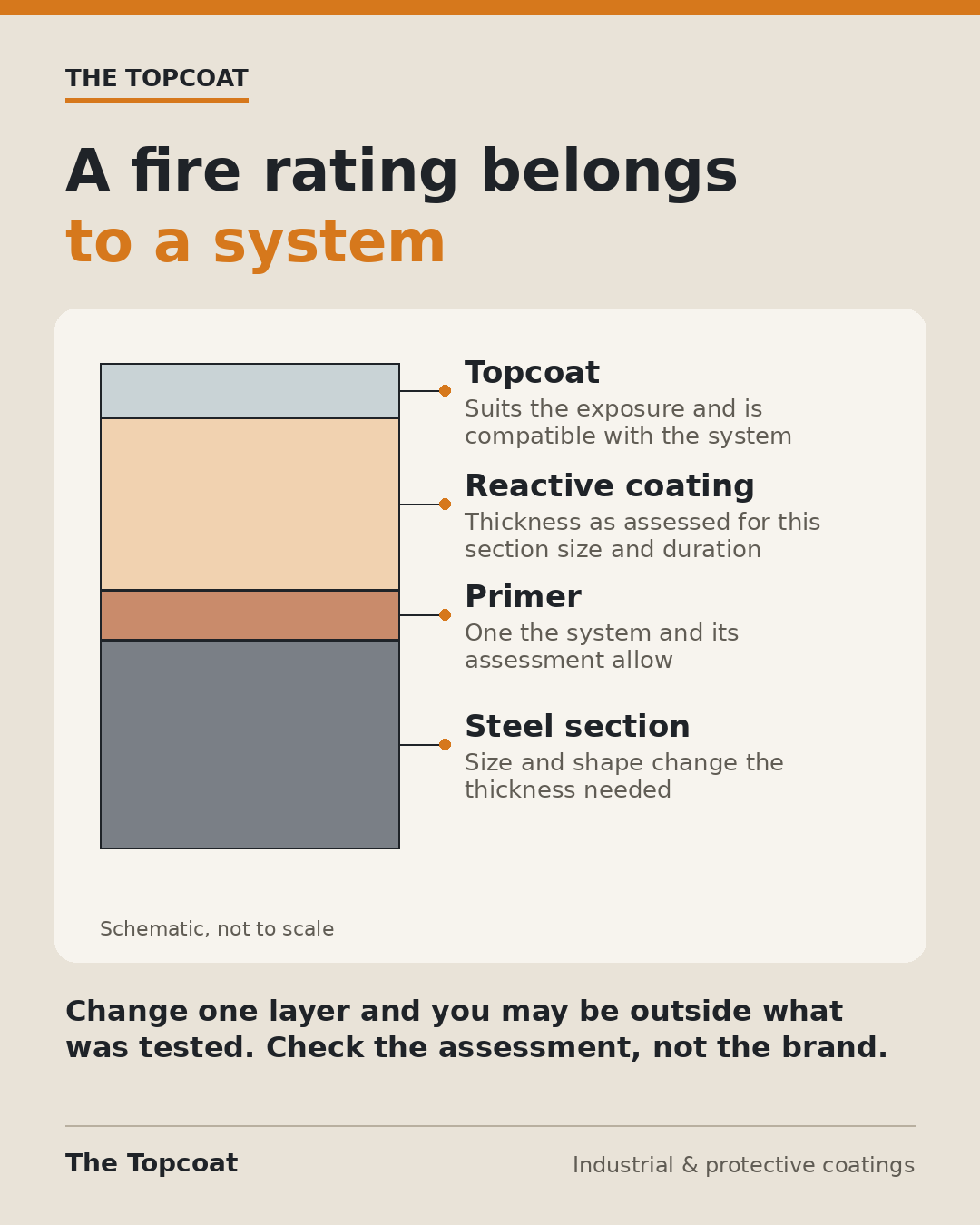
A fire rating comes from testing a specific build-up: a primer, the reactive coating at a set thickness, usually a topcoat, on steel sections of a given size and shape. The result is assessed for that combination. Change one piece and you can be outside what was tested.
EN 16623 puts this in writing for reactive coatings on steel. It treats the coating as a system, covering primer and topcoat compatibility and durability in the conditions it will see in service. It doesn't set the fire performance. That gets shown through the EN 13381 test methods, and EN 13381-8 is the one for reactive coatings.
So on site, the useful questions are about the build-up, not the brand name. 1. Is this primer one the system allows?
-
Is the thickness right for this section size and this duration?
-
Does the topcoat suit the exposure?
The intumescent is one layer of the answer. The rating belongs to all of them together.
Later on I'll get into a harder question: what weathering does to those results.
General information. The project specification and the product data sheet set the requirements for your job.